How heavily a location is promoted says little about its suitability for a particular business. Incorporation in Georgia should start with a specific operating model, rather than the popularity of an online offer.
Dubai may be relevant to an international business venture. The appropriate structure depends on activity, customers and actual organisation. A careful location decision therefore examines future operations as closely as the incorporation process.
A person providing capital does not necessarily need to manage the business personally. When third parties are to exercise ownership rights or management functions, the arrangement needs clear responsibilities and careful legal design.
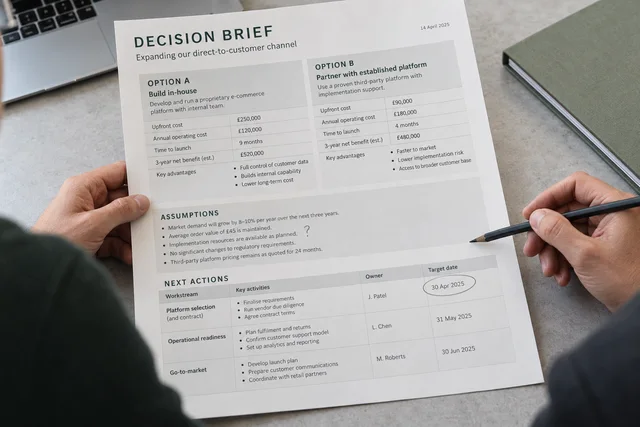
Effective advice makes a business decision easier to understand and act on. It requires a clear brief, usable deliverables and an open distinction between established information, assumptions and questions that remain unresolved.
A registered company and an operationally ready company are not always the same thing. When acquiring a shelf company, work backwards from the first intended transaction and identify each condition required to carry it out.
At the outset, product development, sales, funding and formalities compete for the same limited time. A useful sequence connects the business model’s key assumptions with decisions that cannot easily be reversed.
A shelf company is most relevant when an already prepared entity resolves a specific business constraint. Whether it offers an advantage over fresh incorporation should be tested against the actual venture being planned.
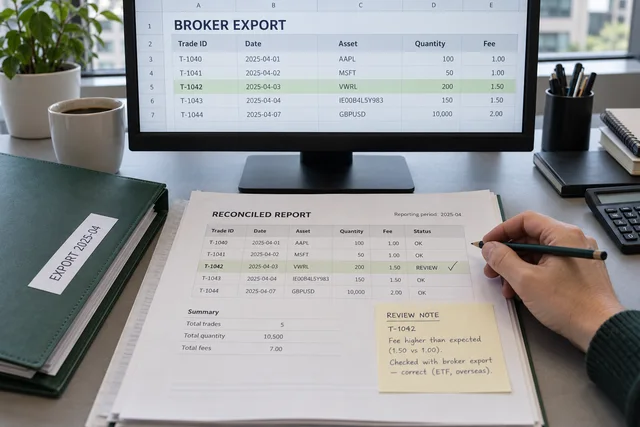
A useful crypto record comes from connected data, not just the current portfolio value. Purchases, sales, transfers and other events should be recorded so their origin and classification remain understandable later.
A large number of transactions makes a report extensive, but not automatically reliable. Effective cooperation between an investor, bookkeeping team and tax adviser starts with clear responsibilities, agreed data formats and an understandable process for unresolved questions.
Not every uncertainty can be removed before starting a company or making an investment. Good research does help distinguish known risks, untested assumptions and personal expectations before capital is committed.
When a business is not to continue, commercial, organisational and legal questions are connected. Appropriate steps depend on the entity and its circumstances. Closure, liquidation and insolvency are not interchangeable terms.
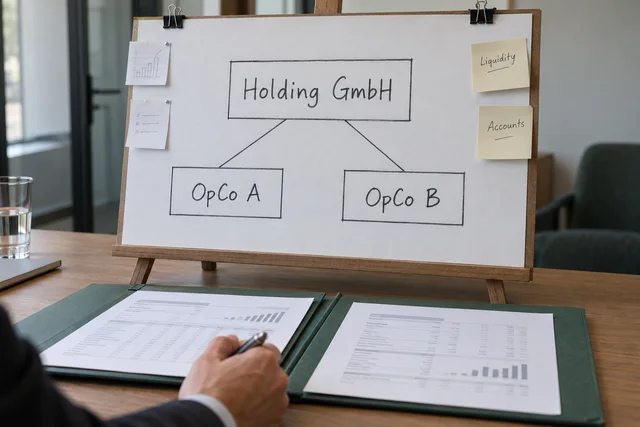
An additional company can organise a business group, while also creating new administrative work. Whether a holding company makes sense depends on ownership objectives, business activities and planned changes, rather than a universal profit threshold.
The debate around Donald Trump’s economic policy shows how quickly political expectations influence business decisions. Companies need to establish which assumptions in their own model are exposed and which responses are realistically available.
A buyer evaluates more than the accounts. They want to understand what will continue reliably after ownership changes. Good preparation makes that future tangible and prevents important questions emerging only shortly before signature.
A long results list does not establish which business suits a buyer. A useful search starts with clear criteria and progresses from anonymous information to a decision supported by evidence.
The Common Reporting Standard provides for international exchange of certain financial account information. For business owners operating across borders, it is a reason to keep accounts, entities and tax-residence information consistently documented.
Using a GmbH to hold investments is an organisational decision with recurring costs and long-term consequences. Before choosing a structure, consider investment objectives, withdrawal needs and the administrative workload together.
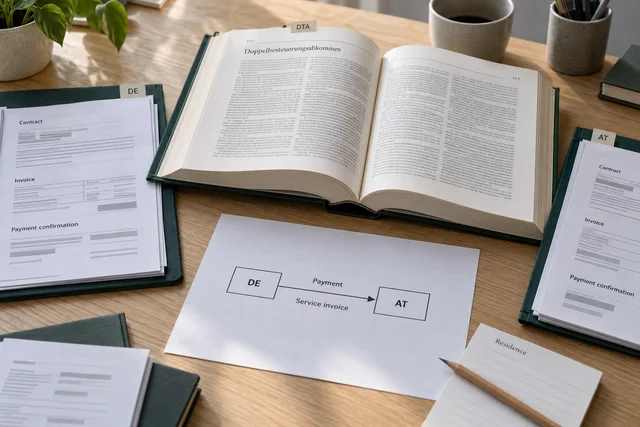
Double taxation agreements may be relevant to income crossing national borders. The applicable provisions depend on the particular facts. Careful preparation helps you ask the right questions when obtaining professional tax advice.
A new year offers a useful moment to examine a business idea seriously. What matters is the next verifiable step: understanding a customer problem, testing an assumption and allocating available resources realistically.
An unusually low tax rate attracts attention. A business decision, however, depends on the conditions behind the claim, the additional costs involved and whether the intended activity fits those conditions.
When payment commitments and available funds diverge, management needs reliable information quickly. A structured assessment supports professional advice and decisions. It must not delay any necessary legal assessment or urgent action.
Digital content reaches customers across borders. Creators, coaches and platform operators should document income, services and actual working locations with the same care expected of any other internationally active business.
Comparing European business locations requires more than a ranking of tax rates. Customer access, staffing, finance and actual operating processes also determine whether a location works over time and how much administration it creates.
A badge can attract attention and help users navigate a platform. On its own, it cannot establish a business partner’s competence or financial reliability. What matters is the information that can actually be checked.
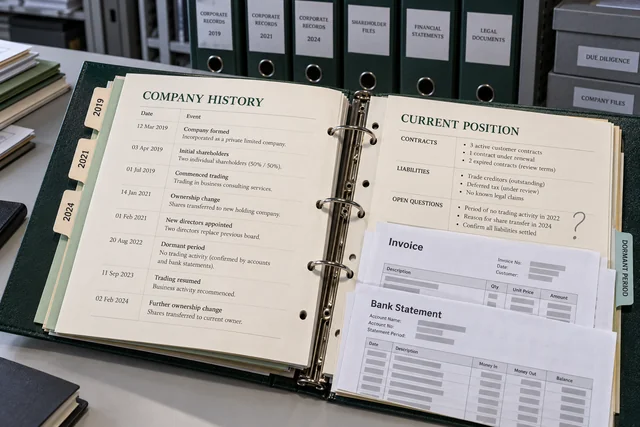
Anyone acquiring an existing company should first understand its actual history. Descriptions such as shell company or shelf company can help with orientation, but cannot replace checks on activity, assets, contracts and obligations.
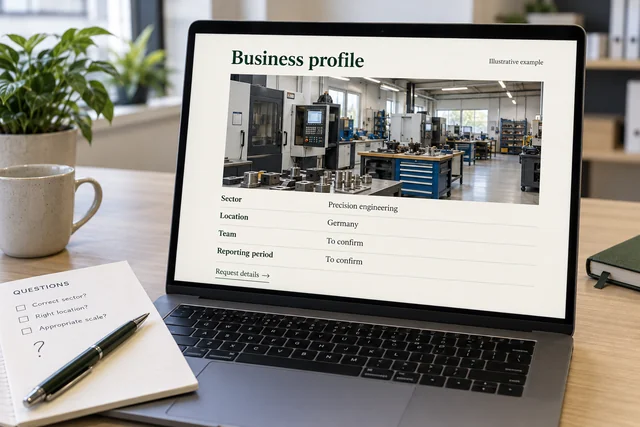
Business profiles make visible a market often accessed through personal contacts. Their strength lies in initial orientation. An acquisition then requires substantially more information than an attractive short description can provide.