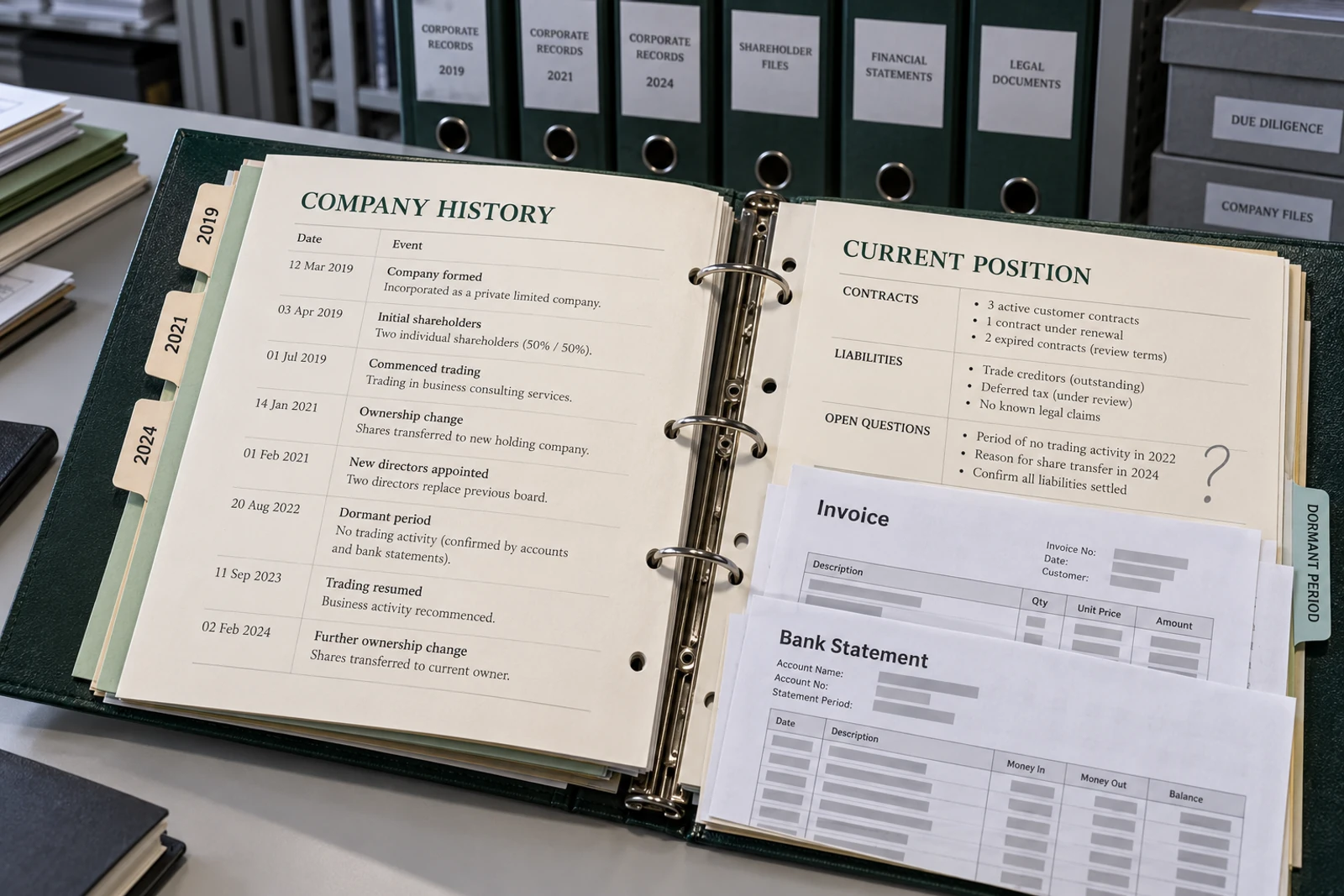
Anyone acquiring an existing company should first understand its actual history. Descriptions such as shell company or shelf company can help with orientation, but cannot replace checks on activity, assets, contracts and obligations.
Ask whether and when the company traded. Which invoices were issued, which accounts were used and which employment or lease arrangements existed? Request suitable documentation to explain any assertion that the company has remained dormant. A dated timeline can expose inconsistencies. It should connect formation, ownership changes, management and material business activity without simply skipping periods for which information is missing.
Understand the position at transfer
The current position matters alongside the history. What funds are actually available, which liabilities remain outstanding and which contracts continue? Distinguish information in the register from the commercial reality. Consider the purchase price and the company’s available assets separately as well. The necessary legal and tax checks should be agreed with suitable specialists before a binding decision is made.
Compare speed with operational readiness
An already registered company may advance some steps, but does not automatically resolve bank access, licences or customer contracts. Build a timetable for your particular business model. Compare acquisition with fresh incorporation using the same criteria: total cost, reliable dates, necessary changes and risks arising from the history. That comparison reveals which option makes practical sense for the intended business.
JABA / PERSPECTIVES
Jaba supports commercial decisions. Individual legal and tax advice is provided exclusively by separately engaged, appropriately qualified professionals.