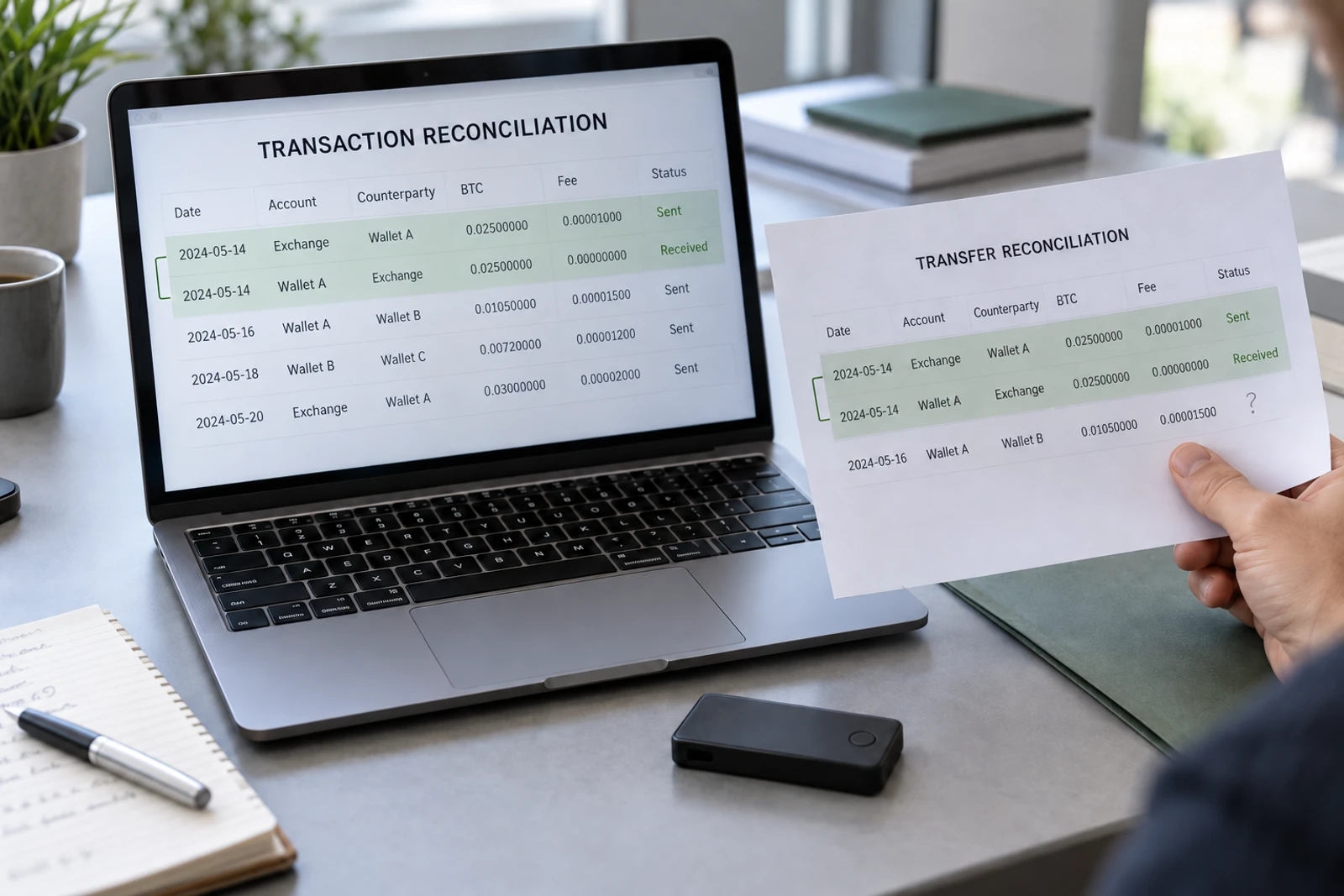
Start with every account and wallet
Build an inventory of exchanges, wallets and other services used. Record periods of use and available export options. Include older accounts where they matter to the transaction history. Preserve statements and raw data in an organised archive. Login credentials and private keys should not be placed in generally shared working files; suitable transaction evidence is needed for professional analysis, rather than unrestricted access to assets.
Connect transfers and transactions
Check whether movements between your own accounts can be matched and whether dates, quantities and fees reconcile. Mark unresolved events explicitly. An automatically produced report can help, but needs a plausibility check against the underlying data. A qualified adviser should determine the specific tax treatment, particularly where different products, forms of income or missing historical information are involved.
Maintain the archive regularly
Set a regular schedule for exports, reconciliation and queries. Record which data version underlies a report and which assumptions were used. German Federal Ministry of Finance guidance on crypto assets highlights the importance of understandable supporting records. Maintaining documentation over time is easier to control than reconstructing many years later. It also makes professional discussions more specific and efficient by separating known facts from unresolved questions.
Jaba supports commercial decisions. Individual legal and tax advice is provided exclusively by separately engaged, appropriately qualified professionals.